
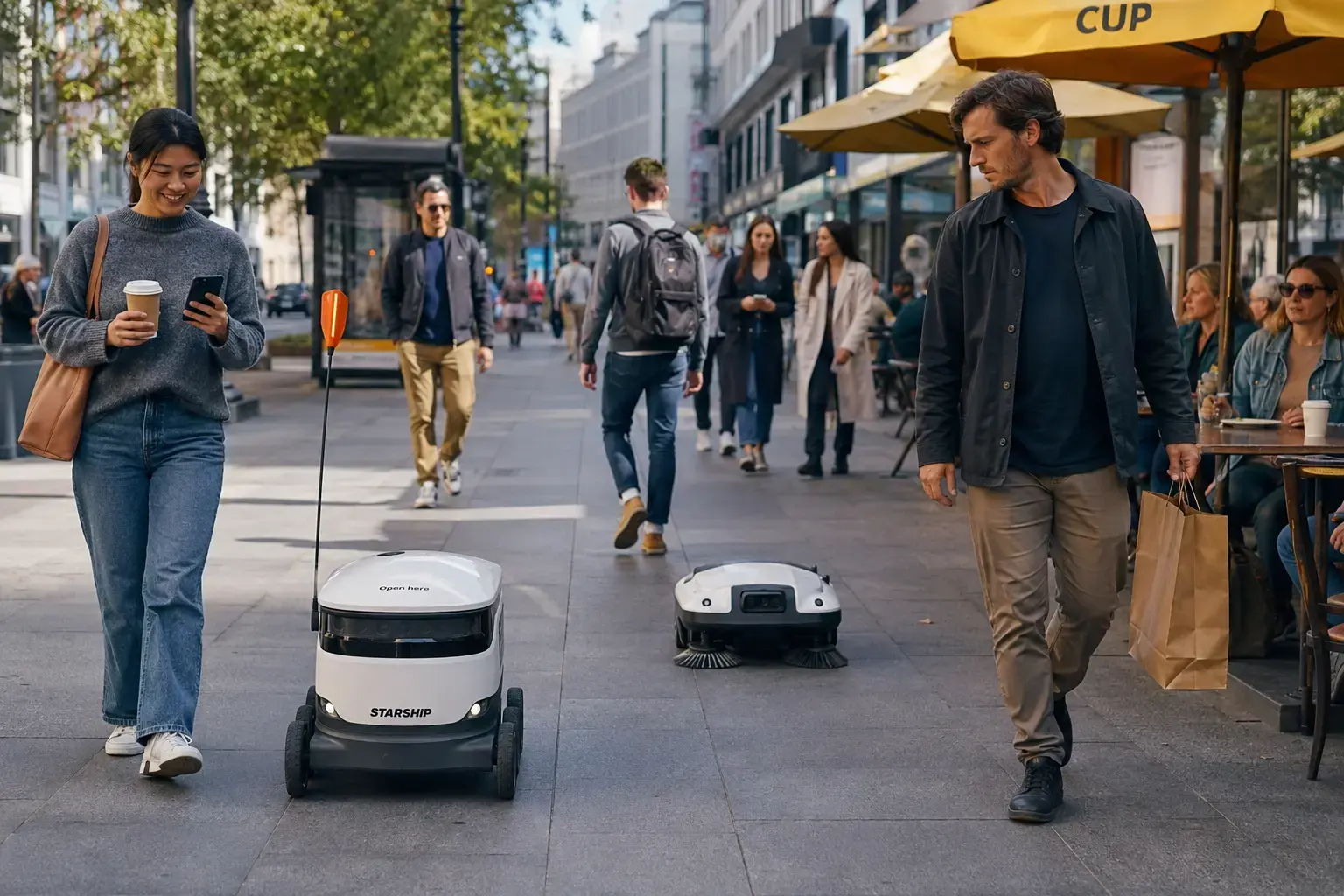
Picture this: you're walking down a bustling city street, coffee in hand, lost in thought. Suddenly, a small wheeled robot glides past your feet, carrying someone's lunch order. A moment later, a quiet cleaning drone hums by, sweeping the pavement. You barely break stride. This is the new normal of urban life in 2026.
Just a few years ago, encountering a robot on the sidewalk would have been noteworthy. Today, it's routine. But beneath this surface-level adaptation lies something fascinating: an entirely new set of social norms emerging in real-time, written not in policy documents but in the subtle choreography of daily movement.
Just a few years ago, encountering a robot on the sidewalk would have been noteworthy. Today, it's routine. But beneath this surface-level adaptation lies something fascinating: an entirely new set of social norms emerging in real-time, written not in policy documents but in the subtle choreography of daily movement.
The Unwritten Rules of Robot Coexistence
We're developing etiquette faster than anyone expected. Watch closely next time you're on a city street, and you'll notice the patterns. Humans instinctively give robots a slightly wider berth than they would another person. There's an unspoken acknowledgment that these mechanical pedestrians can't read body language quite like we do.
When two people approach each other on a narrow path, there's a dance of slight shifts, eye contact, and mutual adjustment. With robots, the dance changes. People tend to make the adjustment themselves rather than expecting the machine to yield. It's as if we've collectively decided that being the intelligent species means taking responsibility for the awkward moments.
The interesting part? This isn't taught anywhere. There's no manual. We're all just figuring it out together, one sidewalk encounter at a time.
When two people approach each other on a narrow path, there's a dance of slight shifts, eye contact, and mutual adjustment. With robots, the dance changes. People tend to make the adjustment themselves rather than expecting the machine to yield. It's as if we've collectively decided that being the intelligent species means taking responsibility for the awkward moments.
The interesting part? This isn't taught anywhere. There's no manual. We're all just figuring it out together, one sidewalk encounter at a time.
The Psychology of Stepping Aside
Why do we step aside for machines? It's a question that reveals something profound about human nature. Part of it is practical: these robots have sensors and programming, but they lack the intuitive understanding of social cues that humans possess. A person can tell from your posture whether you're about to stop, speed up, or change direction. A delivery bot just knows there's an obstacle in its path.
But there's something deeper happening too. We feel a strange sense of protectiveness toward these mechanical workers. They're out there, doing their jobs, vulnerable in their single-minded purpose. When you step aside for a delivery robot, it's not just about efficiency-it's a small act of kindness toward something that can't ask for it.
But there's something deeper happening too. We feel a strange sense of protectiveness toward these mechanical workers. They're out there, doing their jobs, vulnerable in their single-minded purpose. When you step aside for a delivery robot, it's not just about efficiency-it's a small act of kindness toward something that can't ask for it.
The New Pedestrian Hierarchy
Urban sidewalks have always had an unspoken hierarchy. People in a rush weave through slower walkers. Tourists cluster in groups. Locals know the shortcuts. Now, we've added robots to this mix, and they occupy a unique position in the social order.
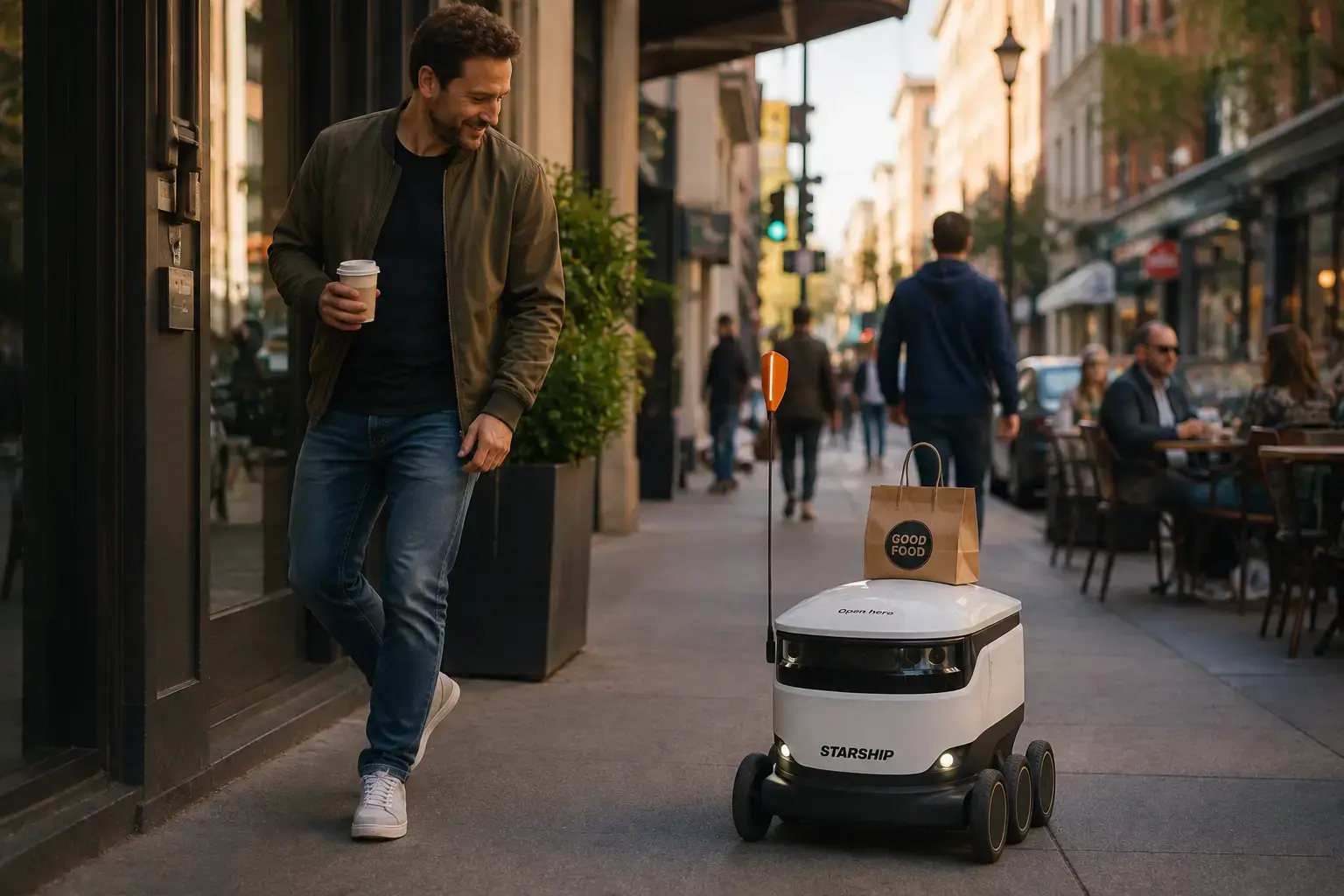
Robots get more space than humans but less than, say, someone walking a large dog. They're given the benefit of the doubt when they make a navigation error. People will often pause their conversations to let one pass, something they might not do for another pedestrian. There's a collective understanding that these machines are guests in our human spaces, and we're the hosts responsible for making things work.
Interestingly, different types of robots receive different treatment. A small delivery bot carrying food might get a warm smile and an enthusiastic step-aside. A larger cleaning drone might be treated more like a piece of moving infrastructure-acknowledged, worked around, but without the same emotional engagement.
Robots get more space than humans but less than, say, someone walking a large dog. They're given the benefit of the doubt when they make a navigation error. People will often pause their conversations to let one pass, something they might not do for another pedestrian. There's a collective understanding that these machines are guests in our human spaces, and we're the hosts responsible for making things work.
Interestingly, different types of robots receive different treatment. A small delivery bot carrying food might get a warm smile and an enthusiastic step-aside. A larger cleaning drone might be treated more like a piece of moving infrastructure-acknowledged, worked around, but without the same emotional engagement.
When Etiquette Fails
Of course, not every encounter goes smoothly. Sometimes a robot freezes in the middle of the path, sensors confused by too much input. Sometimes a pedestrian, lost in their phone, nearly collides with a machine that's dutifully following its route. These moments of friction are where our new etiquette is being stress-tested.
What happens in these situations is revealing. When a robot blocks the way, people don't get angry the way they might with an inconsiderate human pedestrian. Instead, there's a patient waiting, or a gentle maneuvering around the confused machine. If anything, there's concern: is it broken? Does it need help?
This response tells us something important about how we view these machines. They're not quite tools, not quite companions, but something in between-entities deserving of consideration even when they inconvenience us.
What happens in these situations is revealing. When a robot blocks the way, people don't get angry the way they might with an inconsiderate human pedestrian. Instead, there's a patient waiting, or a gentle maneuvering around the confused machine. If anything, there's concern: is it broken? Does it need help?
This response tells us something important about how we view these machines. They're not quite tools, not quite companions, but something in between-entities deserving of consideration even when they inconvenience us.
The Cultural Variations
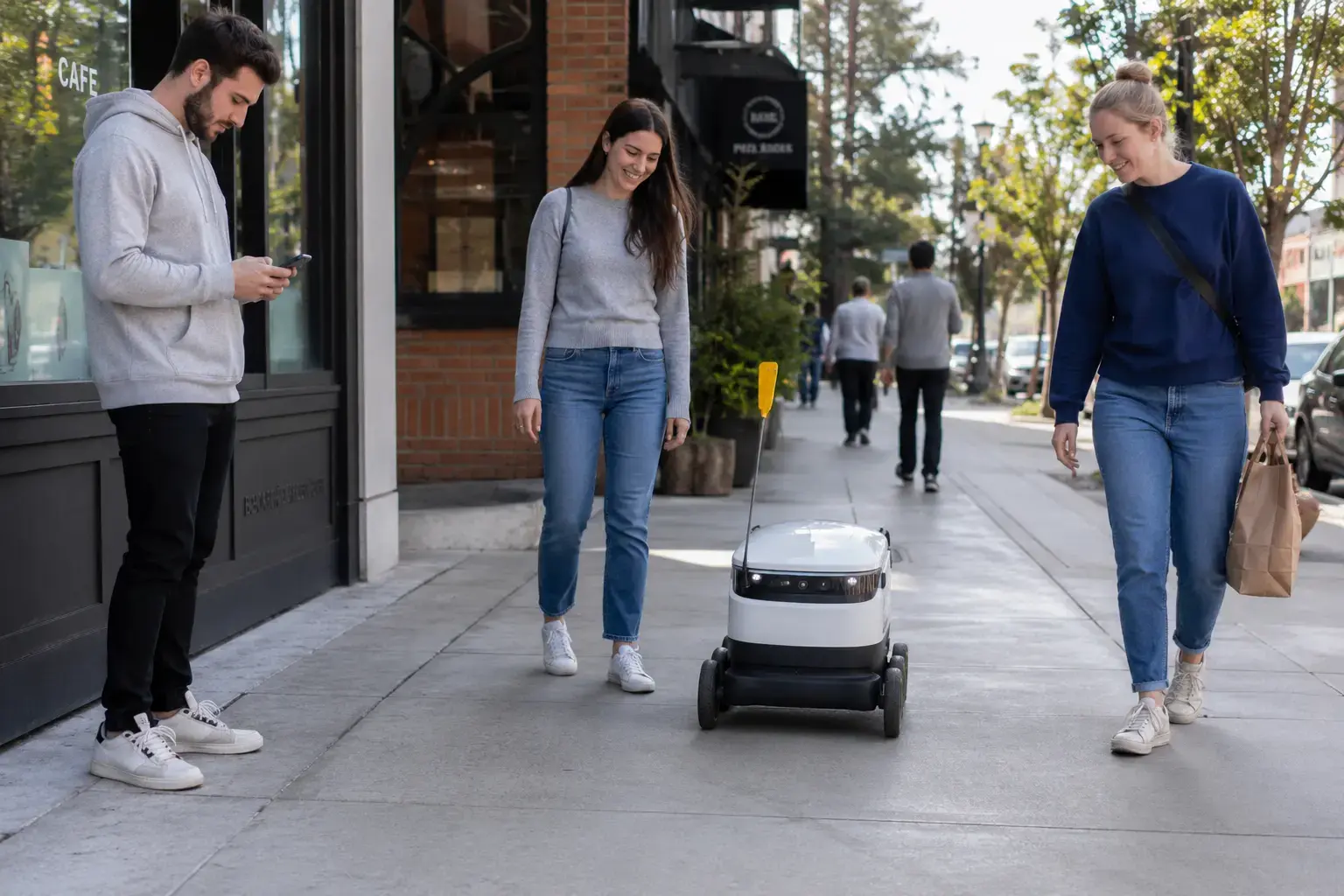
Just as pedestrian etiquette varies from city to city, so does our interaction with sidewalk robots. In some places, people treat them with formal distance, giving them wide berth and minimal acknowledgment. In others, there's a warmth that borders on friendliness-people waving at delivery bots, children running alongside them for a few steps.
These cultural differences matter because they're shaping the future of human-robot interaction. The norms we establish now, in these early days of widespread sidewalk robotics, will likely persist and evolve as the technology becomes even more integrated into daily life.
These cultural differences matter because they're shaping the future of human-robot interaction. The norms we establish now, in these early days of widespread sidewalk robotics, will likely persist and evolve as the technology becomes even more integrated into daily life.
What We're Learning About Ourselves
Perhaps the most surprising aspect of this mass experiment in robot etiquette is what it reveals about human nature. We're adapting quickly, showing flexibility and consideration. We're extending our social contracts to include non-human actors. We're finding ways to share space that minimize friction and maximize cooperation.
In a world that often feels divided, there's something quietly hopeful about watching thousands of strangers independently develop the same courteous behaviors toward machines. It suggests that perhaps our capacity for consideration is broader than we realized.
In a world that often feels divided, there's something quietly hopeful about watching thousands of strangers independently develop the same courteous behaviors toward machines. It suggests that perhaps our capacity for consideration is broader than we realized.
The Future of Shared Spaces
As we look ahead, the sidewalk is just the beginning. These same questions of etiquette and coexistence will play out in parks, in buildings, in every shared space where humans and robots meet. The norms we're developing now-patience, consideration, the willingness to adapt-are forming the foundation for a future where intelligent machines are simply part of the background of daily life.
The urban pedestrian dance continues to evolve. And in its steps, we're writing the social code for a new era, one sidewalk encounter at a time.
The urban pedestrian dance continues to evolve. And in its steps, we're writing the social code for a new era, one sidewalk encounter at a time.