
Picture a typical situation: a founder spends three weeks staring at a whiteboard, trying to grab a clean dictionary-word .com for a new startup. Every decent option is taken, parked, or listed for five figures. Then one evening, out of pure frustration, they type a made-up word into a domain search - and it's available. Suddenly there are a dozen options on the table. That moment of relief is how most founders discover brandable domain names: invented, short, pronounceable words that carry no dictionary meaning but enormous brand potential. In this guide, we'll unpack what makes them work, how the trend was born, and which brandable .com names currently sit on the Ainame24 shelf.

What Is a Brandable Domain Name?
So, what is a brandable domain, exactly? It's a domain built on an invented word - short, pronounceable, and deliberately free of dictionary meaning. Kodak, Rolex, Spotify: none of these described a product when they were born. They were empty vessels that became meaningful because a company poured its reputation into them.
The opposite pole is the descriptive name - think "BestPlumbingServices" or "CheapFlightsFinder." Descriptive names explain; brandable names evoke. In the classic brandable vs descriptive debate, descriptive feels safer on day one, but it caps your story: you're stuck describing what you sell today. An invented word never pigeonholes you.
There's also a practical reason brandable domain names are now the realistic path to a clean .com: nearly every short dictionary word is already registered. A coined word is one of the few ways a young company can still own a short, exact-match .com instead of renting a compromise.
The opposite pole is the descriptive name - think "BestPlumbingServices" or "CheapFlightsFinder." Descriptive names explain; brandable names evoke. In the classic brandable vs descriptive debate, descriptive feels safer on day one, but it caps your story: you're stuck describing what you sell today. An invented word never pigeonholes you.
There's also a practical reason brandable domain names are now the realistic path to a clean .com: nearly every short dictionary word is already registered. A coined word is one of the few ways a young company can still own a short, exact-match .com instead of renting a compromise.
A Short History: How Brandable Names Took Over
The trend didn't appear overnight. It grew in four quiet waves.
The 1990s: the land grab. When the web went commercial, companies rushed to register obvious dictionary words. Books.com, Hotels.com, Business.com - the plainest .com domains were claimed astonishingly early, and the leftovers began changing hands for serious money.
The 2000s: the Web 2.0 proof. A generation of startups deliberately misspelled or coined words - Flickr and Tumblr showed that a made-up name could feel friendly, not fake. Dropping a vowel or adding a soft ending became a recognizable startup dialect, and invented domain names stopped being a risk and became a signal: we're a tech company.
The 2010s: naming becomes a discipline. Accelerators, branding agencies, and naming consultants converged on the same advice: pick a name you can trademark and fully own. Startup naming turned into a craft, and coinages like Spotify, Vinted, or Zalando proved that invented words scale across borders without translation problems.
The 2020s: brandable by default. By now, most short dictionary .coms are either in use or priced at five and six figures. The math is simple: a coined word is often the only name a bootstrapped team can actually own outright. What began as a stylistic choice became the default.
The 1990s: the land grab. When the web went commercial, companies rushed to register obvious dictionary words. Books.com, Hotels.com, Business.com - the plainest .com domains were claimed astonishingly early, and the leftovers began changing hands for serious money.
The 2000s: the Web 2.0 proof. A generation of startups deliberately misspelled or coined words - Flickr and Tumblr showed that a made-up name could feel friendly, not fake. Dropping a vowel or adding a soft ending became a recognizable startup dialect, and invented domain names stopped being a risk and became a signal: we're a tech company.
The 2010s: naming becomes a discipline. Accelerators, branding agencies, and naming consultants converged on the same advice: pick a name you can trademark and fully own. Startup naming turned into a craft, and coinages like Spotify, Vinted, or Zalando proved that invented words scale across borders without translation problems.
The 2020s: brandable by default. By now, most short dictionary .coms are either in use or priced at five and six figures. The math is simple: a coined word is often the only name a bootstrapped team can actually own outright. What began as a stylistic choice became the default.
Why Founders Now Prefer Brandable Names
Beyond availability, invented names simply do more work for a young brand. Here's why so many founding teams start with a coined word:
- Trademark-friendly. A distinctive coined word is far easier to protect than a generic phrase dozens of competitors might use.
- Easier to rank. Search engines have little competition for a unique word; a descriptive name fights the entire dictionary.
- Social handles available. A unique coinage still has a decent shot at matching usernames across platforms.
- More memorable. A short, rhythmic word sticks in the head better than a string of keywords.
- More emotional. Invented names carry tone and texture - warmth, speed, trust - before they carry meaning.
- Cheaper than dictionary .coms. Premium brandable domains typically cost a fraction of a plain dictionary word.
- Future-proof. A coined name doesn't lock you into one product, one category, or one market.
What Makes a Brandable Name Great
Not every made-up word is a good one. Naming experts tend to grade coinages against a short checklist:
Great brandable names feel discovered, not manufactured. They sound like words that should already exist.
- Pronounceable at first sight - if people can't say it, they can't recommend it.
- 5-8 letter - long enough to feel like a word, short enough to fit a logo.
- No numbers or hyphens - both scream "compromise" and hurt recall.
- Evokes a feeling, not a function - a hint of meaning (leaf, guard, sky) without literal description.
- Works globally - easy to say and free of awkward meanings in other languages.
- Passes the radio test - heard once on the radio, a listener can spell it correctly.
Great brandable names feel discovered, not manufactured. They sound like words that should already exist.
Real Examples: Brandable Domains on Ainame24
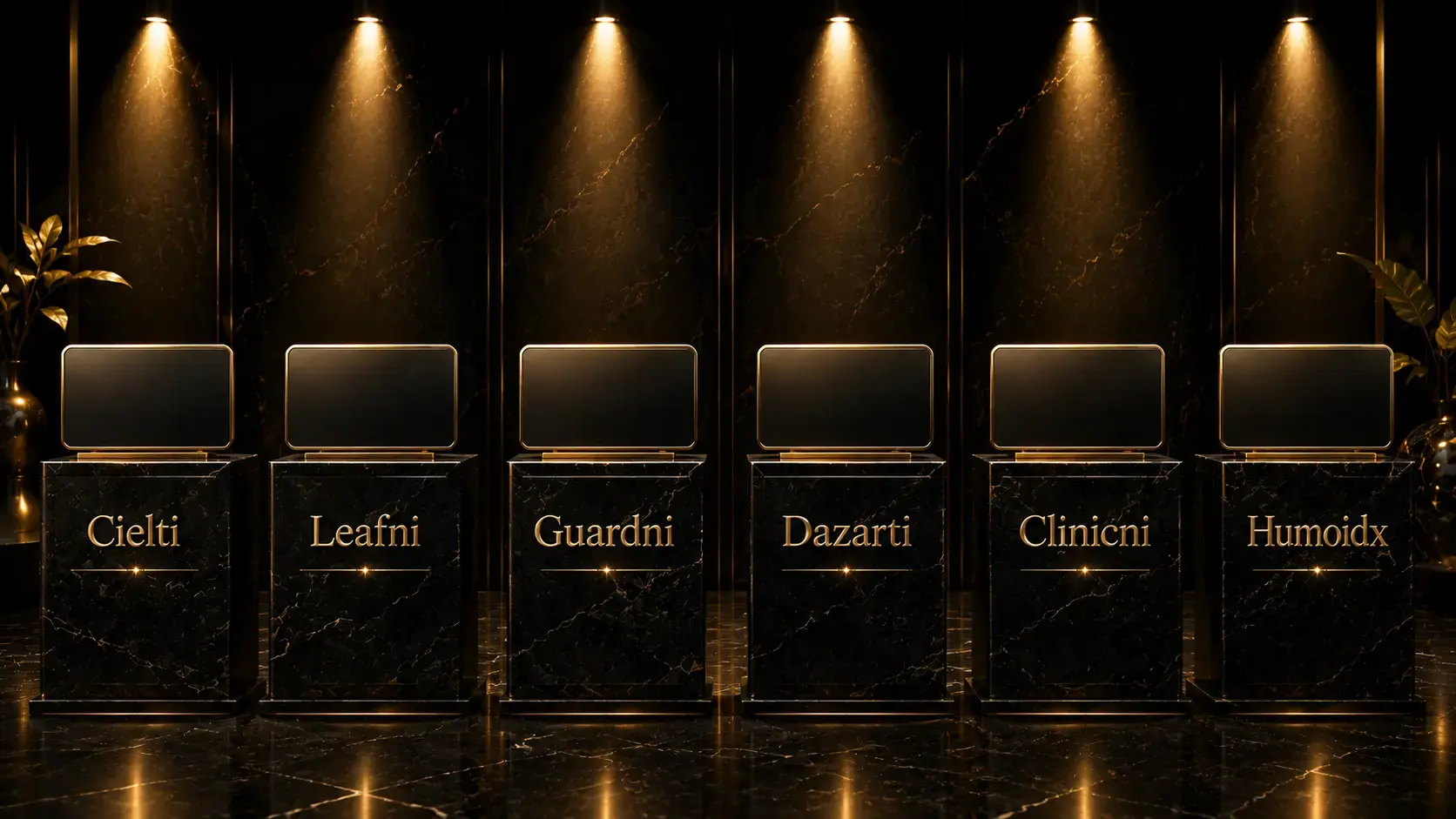
Theory is easier to digest with real names in front of you. Below is a hand-picked slice of the premium brandable domains currently listed on Ainame24 - chosen for variety, because the right name depends on the feeling you're selling. Each name links to its showcase page with the full story and the official marketplace listing.
Cielti.com
Cielti is a tender variation of the Spanish "cielito" - a warm term of endearment meaning "little sky" or "sweetie." It carries lightness, dreams, and a smile in six melodic letters, and it resonates powerfully with the huge Spanish-speaking market.
It's a natural fit for fashion and beauty, wellness and meditation apps, dating platforms, kids' products, or travel brands that want to feel romantic, close, and human.
It's a natural fit for fashion and beauty, wellness and meditation apps, dating platforms, kids' products, or travel brands that want to feel romantic, close, and human.
Leafni.com
Leafni blends the English word "leaf" with a soft "-ni" ending that adds the intimacy of a diminutive - almost "my little leaf." The name evokes nature, freshness, growth, and sustainability, with a warm, human touch.
Its showcase page positions it across the green economy: eco-products, natural cosmetics, organic food, sustainable fashion, plant shops, yoga studios, and eco-tourism. Any brand that wants to feel organic and kind could grow into it.
Its showcase page positions it across the green economy: eco-products, natural cosmetics, organic food, sustainable fashion, plant shops, yoga studios, and eco-tourism. Any brand that wants to feel organic and kind could grow into it.
Guardni.com
Guardni pairs the strong English word "guard" with a modern, tech-sounding "-ni," reading as "guardian plus technology." The result is dynamic and confident - a name that instantly evokes protection and smart defense.
It was built for the security economy: cybersecurity platforms, AI threat detection, VPN and antivirus services, smart-home surveillance, parental-control apps, and corporate data protection. Trust is the product here, and the name says it out loud.
It was built for the security economy: cybersecurity platforms, AI threat detection, VPN and antivirus services, smart-home surveillance, parental-control apps, and corporate data protection. Trust is the product here, and the name says it out loud.
Dazarti.com
Dazarti hums with creative energy: "daz" hints at dazzle, "arti" at art. It's rhythmic, international, and easy to pronounce in most languages - a name that sounds like a spotlight.
The page points it at the creator economy: AI image and video generation tools, design studios, content-creation platforms, digital-art marketplaces, and creative agencies. A bright name for brands that help people make beautiful things.
The page points it at the creator economy: AI image and video generation tools, design studios, content-creation platforms, digital-art marketplaces, and creative agencies. A bright name for brands that help people make beautiful things.
Clinicni.com
Clinicni joins "clinic" with the same light "-ni" ending, softening a serious word into something modern and approachable while keeping instant medical credibility. It sounds professional, reliable, and technological at once.
It fits telemedicine platforms, clinic management systems, diagnostic AI, appointment apps, and health-tech startups. In healthcare, a name must sound calm and competent at the same time — Clinicni manages both.
It fits telemedicine platforms, clinic management systems, diagnostic AI, appointment apps, and health-tech startups. In healthcare, a name must sound calm and competent at the same time — Clinicni manages both.
Humoidx.com
Humoidx fuses "human" and "humanoid" with an X - the letter technology loves for its experimental, futuristic charge. It sounds like a brand from a sci-fi credits sequence: dynamic, ambitious, hard to forget.
The name targets the robotics era: humanoid robot development, personal robot assistants, AI training platforms, and futuristic lifestyle brands. A name for a company that intends to define a category, not join one.
The name targets the robotics era: humanoid robot development, personal robot assistants, AI training platforms, and futuristic lifestyle brands. A name for a company that intends to define a category, not join one.
Notice the range: tenderness, nature, protection, creativity, care, and pure futurism. That's the point of brandable naming - the word sets the emotional key before the product even launches.
Where to Buy a Brandable Domain Safely
When you're ready to buy a brandable domain, the golden rule is boring but essential: use a trusted path. Verified marketplaces and escrow services hold your money until the domain is legally transferred to you, which removes the single biggest risk of a private deal.
Also re-check trademarks before paying. A coined word is usually safer than a dictionary phrase, but you still want a clean search in your target markets and classes. And always confirm where a domain is actually listed: every showcase page on Ainame24 links its domain to an official Afternic or Atom listing, so you can verify the sales channel before you commit. If you're comparing brandable domain names for sale today, browse our brandable domain collection and see which names are still on the shelf.
A dictionary .com is a trophy; a brandable name is a seed. It costs little today, and if the company behind it grows, the word becomes a moat - trademarkable, rankable, and impossible to copy. The names above are still available at the time of writing, but good coinages rarely sit on the shelf for long. Spend an hour with the collection, say the names out loud, and imagine your logo on one of them. Your future brand might already be waiting at Ainame24
Also re-check trademarks before paying. A coined word is usually safer than a dictionary phrase, but you still want a clean search in your target markets and classes. And always confirm where a domain is actually listed: every showcase page on Ainame24 links its domain to an official Afternic or Atom listing, so you can verify the sales channel before you commit. If you're comparing brandable domain names for sale today, browse our brandable domain collection and see which names are still on the shelf.
A dictionary .com is a trophy; a brandable name is a seed. It costs little today, and if the company behind it grows, the word becomes a moat - trademarkable, rankable, and impossible to copy. The names above are still available at the time of writing, but good coinages rarely sit on the shelf for long. Spend an hour with the collection, say the names out loud, and imagine your logo on one of them. Your future brand might already be waiting at Ainame24